
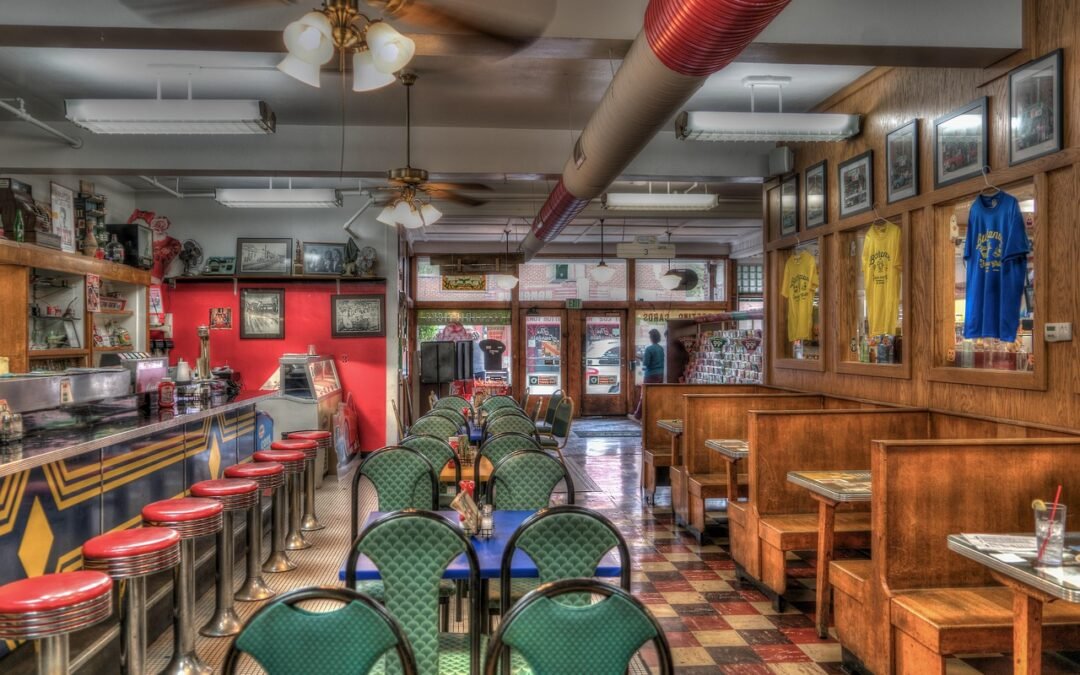
The 600 Double-Cross
The jangle of the 600 Café doorbell harmonized with the raucous clatter of dishes. A hum of neighborly chatter and the comforting aroma of brewing coffee chipped away at the chill of disgrace that lingered from an afternoon in the slammer.
I’d left those two yahoos drying out in the cell next to me, once Nansi posted bail. I made my gushing apologies over the Nokia while I trotted from the cells back to my Tacoma.
“You’d better bring dinner home when you come,” she told me. “Call it penance. But make it good enough to eat.”
Then she hung up on me.
Ideas for a meal with the power to redeem inappropriate behavior fell one by one in the rush toward my truck. When Johnny Horton Martin’s F-250 came into view just down from the 600, it was like a sign from heaven.
The eatery was near capacity. Half the folks straddling stools at the counter swiveled with eyebrows raised at the new arrival. Two or three nodded in recognition. A couple of starving old-timers pushed in behind. “Coffee smells divine,” one said, voicing gratitude for all. “Pardon.” He laid a hand on my shoulder and pushed through with his partner.
A congenial grunt slipped from my lips as I scanned the booths for Johnny. Several children too young for school kneeled on the cushy red seats to peer at their elderly neighbors. That little girl of Renée’s popped to the surface of my thoughts, and I latched onto the Nokia in my coat pocket. By rough calculations, I guessed the kid had been gone for twenty-plus hours. I should call for a status update.
But my immediate problem required a menu. I stepped to the counter and grabbed one. Greasy fried potatoes and red meat had my mouth watering. A juicy burger sounded divine.
The dark-haired waitress, Jules materialized across from me, clutching a steaming pot of coffee. “Cuppa?” she asked in a British accent.
“Oh hey, Jules,” I said with wide eyes. “Long overdue.”
She poured a stream from twelve inches high, closing the gap at the last ounce. “Spend some time in the nick, love?”
“You heard the news.” I scowled. “No good deed.”
“Makes you more interesting, dunnit?”
“Humph. Four helpings of pot roast, mashed potatoes and peas.” I snapped the menu with a finger. “To go. Kids will adore those peas.” I laughed to myself.
She smirked. “I’ll put some corn on two a those plates. And pop a cinnamon bun onto your plate for courage.”
“Why does the whole world know children love peas?”
She shook her head and left me to ponder the mystery alone.
An ethereal perception follows on the heels of forced confinement. Awareness of the room expanded like a bubble until my gaze landed on Johnny Horton Martin, trademark ball cap unmistakable. My heartbeat quickened, and the room grew brighter.
The ranch magnate sat in a booth opposite the counter.
Customer chatter, server murmurs, tinkling glass and jangly silver, the rattle of plates bussed into large plastic bins—typical restaurant din unfolded into a thousand discreet notions saturating the space. A fry cook dropped a dish in the kitchen. Muffled tones of country music crystallized into distinct lyrics, charging the air with melodic energy.
I turned to my waitress. “Back in a jiffy.”
“Best not forget those dinners,” she chided.
The glide across the floor was a spacewalk. My hope factor had peaked, and closing the deal for those six Tundras would be a breeze.
A waitress bumped me off target. “Sorry,” she said, wispy voice pulling me toward the ground. One held a stack of dishes from a cleared table. The other clutched my sleeve like a balloon string. “My fault.” She smiled and released me back into the current of hope. Aloft again, my float drifted back into alignment with Johnny.
Strategy. Ease in like a gentleman, plant the idea for his purchase and line up a quick chat before he left the restaurant. Glide back to pick up the meals for the fam. Mention that last to lock Johnny in. He understood family first. Sell him on the plan to help Renée before snowfall. Give him that ultimate reason to wait out my little jaunt into the mountain wilderness.
My body bounced with intoxication by the time I reached the target.
“Johnny,” I said, readying my precision delivery. “Fancy the coincidence.”
“Connor,” Johnny said. His tone held a cordial coolness reserved for interloping solicitors. Aloofness squeezed some of the air from my expectant dirigible. I’d predicted a hearty greeting.
Enthusiasm deflated further as Johnny’s breakfast partner materialized next to me. I’d missed his presence entirely, falsely assuming Johnny ate alone.
“Connor Pierce,” George Shumaker articulated, with an unfiltered honesty characteristic of the old buzzard. His brow furrowed slightly, and he pursed his lips with superiority, deepening the irony of his sentiments. “How’s business?”
I stared at the Ford dealer. The question had every right to join our conversation. A social courtesy between competitors. But in the crow’s feet spidering out from his eyes I identified the snub.
“I’ve decided to go with Fords, Connor,” I heard Johnny say. His voice sounded tinny.
My head swiveled back to view the formidable master of business. “How’s that?”
“George and I are working out the details, now.” It sounded like Johnny Horton Martin spoke from the inside of a barrel. Not the version I remember sitting with my father on the porch when I was young. Not the same man I’d haggled with yesterday. The idea of asking this variant why he’d been so quick to choose against me seemed contrary. Was I to offer congratulations to George the Ford Shumaker? It sounded like agreement to the terms and a sure conclusion to the match.
“What went wrong with the deal we had?” I heard myself asking.
Johnny watched his hand turn eggs over as he spoke. “Jail time, son.” Once he realized he was talking to the plate, he set the utensil down and looked me in the eye. “Time in the tank forecasts an instability of character. I got to have someone who can look after my interests for the entire duration of the trail drive. If I’m left waiting on the fellows over to Forsythe—or worse than that, God-forbid-it, Glendive, Montana—to set a vehicle right when she breaks, well now, that puts a hell of a bind on my operation. It just won’t do.” His pupils were wide open, and moisture dampened the eye sockets.
My jaw fell slack. Spices and hot peppers from Johnny’s eggs tickled the back of my throat. He’d eaten them the same way when I accompanied Daddy Dixon to breakfast years ago. I’d been maybe ten years old and bold enough to ask why a man would do that. His laughter of appreciation for the moxie still rang in my ears. His words, “You’ll do just fine, boy,” I recalled as well.
I clamped my mouth shut and gave him a nod. “Fair enough,” I said and turned a quick glance to his breakfast partner. “George.” It was all I could muster.
The return trip to my counter seat must have occurred with the chaotic sputter of a loosed balloon. I don’t remember it.
Jules from Newbury, Berkshire stared into me, her irises bathed in the greenish tint of the moorlands of England. And they recognized pain. “I made sure about the corn,” she said in an emotional British cadence with a delicate touch on my arm.
Half-drunk coffee and an untouched cinnamon roll lay forgotten as I pushed crumpled ten spots across the counter. Clutching the heavy bag of warm dinners against my throbbing chest, shoulders hunched against my blackened pride, I slinked out, a wounded coyote scurrying from the unanticipated ferocity of an elk.